Supporting My Nervous System: What Actually Helps Right Now
The notifications still come in. The calendar still fills up. Some days I handle it better than others. Other days I catch myself slipping back into old patterns of over-giving and running on empty.
A few years ago, I had never even heard the phrase “nervous system regulation.” If someone had suggested I pay attention to mine, I probably wouldn’t have given it much thought.
What I did know was that I felt tense all the time. My shoulders were permanently tight. Every massage therapist commented on how many knots they found, almost treating them like a personal challenge. Rarely did they make much of a dent.
The strange part is that none of it seemed unusual to me. I had gotten used to living that way and I assumed everyone felt the same. I cringed every time my phone buzzed with another work message, and I often caught myself holding my breath while answering emails. At the time, I thought that was just part of being successful.
This is what I’ve learned so far about supporting my nervous system while still living in the real world.
Why I Started Paying Attention To My Nervous System
After years of pushing through tension, shallow breathing, and constant mental chatter, I finally understood that my body was never going to just “catch up” on rest during the weekend. The pressure had built up for too long.
I needed ongoing ways to help my body feel safe again. Not just one big vacation or the occasional self-care treat, but smaller, repeatable practices I could turn to even on busy days. Ways to demonstrate to my body that things were changing. That I was no longer willing to live in a constant state of stress and depletion.
Five Practices That Helped Me Reset
These aren’t complicated routines. Just simple practices I’ve returned to over and over again that have made a noticeable difference.
I Stop Trying to Push Through
I used to think stepping away from my desk for five minutes meant I was wasting time. Now I realize those five minutes often help me think more clearly than another hour of pushing through. Sometimes, simply walking outside and around the building a few times while consciously slowing my breath is all it takes to help my body remember that it doesn’t have to stay in a constant state of urgency.
I Put My Feet on the Ground
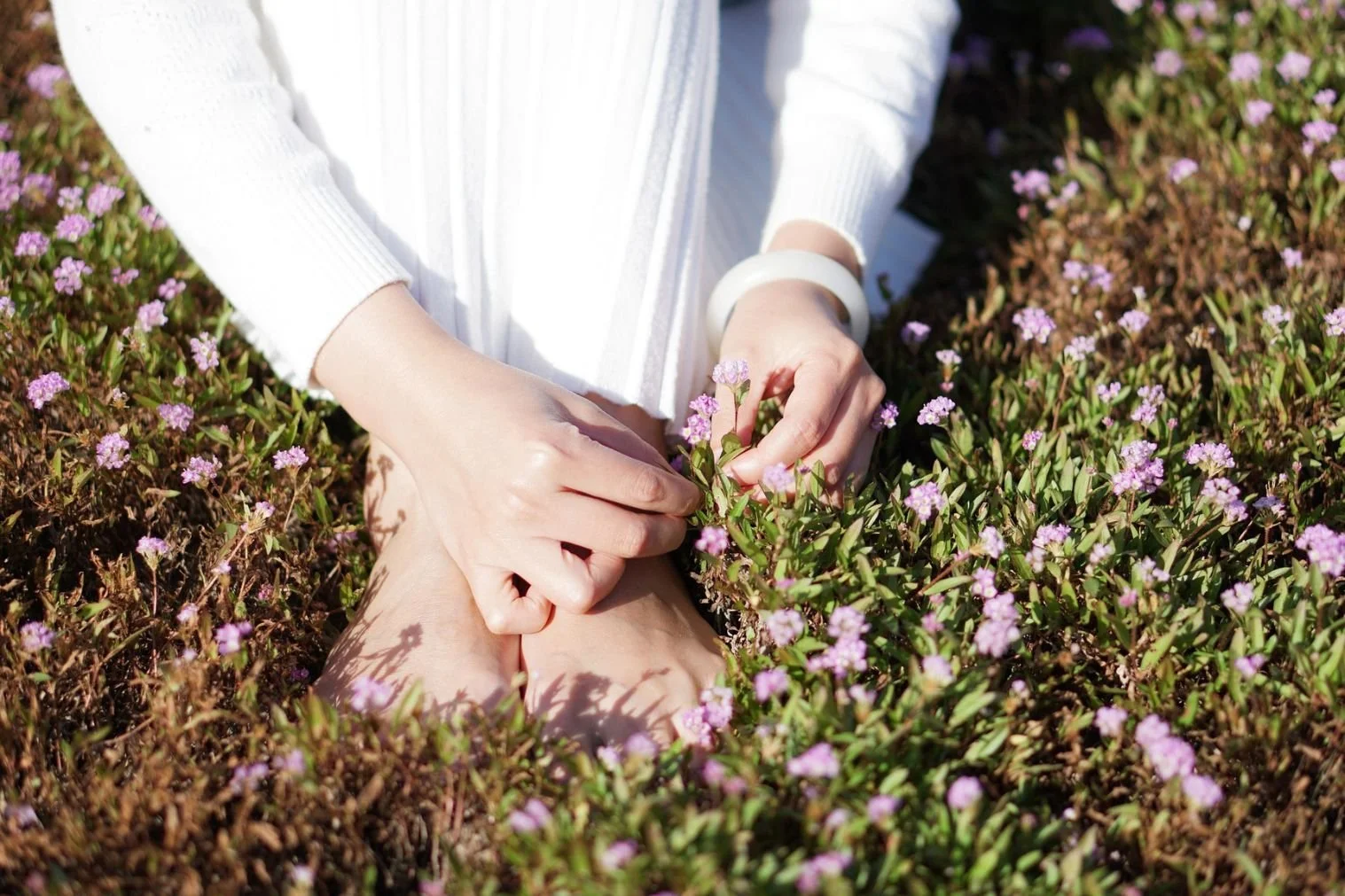
One of the simplest things I do is take my shoes off and walk outside. And yes, I have done that on my lunch break.
Other times, it’s nothing more than a slow walk to my mailbox. As I walk, I ask the earth to absorb and transform any of the dense energy I’ve been carrying. I’m not sure how it works, whether it’s the science behind it or simply the intention I bring to the moment, but it helps calm me, and I come back from my barefoot walk feeling lighter.
I Give Myself Permission to Be Still
I do this through a combination of meditation and/or sound healing. Sitting in stillness, even for just 15 minutes, helps quiet my racing mind. Other times, I’ll lie in bed with my headphones on and listen to healing frequencies.
I also try to attend a local sound bath once a month. If you’ve never attended one, I highly recommend giving it a try. You simply lie there while the sound vibrations wash over you. Within minutes, I find myself in a deep meditative state, and I leave feeling noticeably more relaxed.
I Practice Self Reiki
Since much of the dysregulation I experience in my body comes from overthinking, I’ll sit or lie down and gently cup the sides of my head or lightly place my palms over my eyes while I slowly breathe. Other times, I’ll rest my hands over my heart and just breathe.
You don’t have to be trained in Reiki to do this. Holding your body is actually a very intuitive way to offer yourself comfort. Spending a few minutes in each position helps brings me back to the present moment and leaves me feeling more grounded.
I Don’t Answer Everything Right Away
This has been a hard habit for me to change, but it’s also been one of the most important. I used to feel like I had to respond to every text message and email the moment it came in.
Now, I intentionally create pockets of time where I don’t immediately read or reply to messages. Protecting those moments of peace has helped me realize that not everything is not as urgent as it feels.
Moving Out Of Survival Mode
It’s not always the big practices that move the needle. It’s the small daily choices that slowly teach my body that it no longer has to operate in survival mode.
Drinking a glass of water before my coffee. Noticing when I’m holding my breath and letting it go. Becoming aware of how much I drained my own energy by saying “yes” when I wanted to say no, or by staying mentally “on” even when I was physically home with my family.
I’m Still Learning, Too
I want to be honest here. I have not mastered this. There are days when I fall back into old habits and feel the effects on my body. The difference now is that I notice it faster and I have tools to help bring myself back into alignment instead of spiraling for weeks.
Just recently I found myself slipping back into old habits. My shoulders were tight, I was rushing to complete tasks, and I noticed myself getting short and impatient with others. Instead of ignoring it, I acknowledged what was happening and gave myself permission to slow down and breathe fully and deeply. It wasn’t a dramatic fix, but it was enough to shift the moment.
This is a practice. Not a perfect system.
Supporting my nervous system has helped me show up more present with the people I care about and has helped me be clearer in my decision making. It hasn’t removed the demands of life, but it has changed the way I move through them.
If you are still navigating burnout, still working, still responsible for other people, and still figuring this out, I see you. You don’t need a perfect morning routine or hours of free time to start feeling more like yourself again.
Start with one small thing that feels doable on your hardest day. That’s enough.
I’ll continue sharing what I learn here as I go. For now, I invite you to try this:
Take your shoes off and step outside onto the grass. Step slowly and intentionally. Feel the earth holding you.
You’re not alone. Let the earth remind you that you don’t have to hold everything so tightly. You deserve to feel it.